


The Secret Geography of Pleasure: 200 Years of Gentleman’s Companionship in London
Walk down Curzon Street as the streetlights flicker on, or turn off Baker Street into a quiet Georgian square, and the bricks still hold a very specific memory. Long before five-star hotel keycards and private glass penthouses existed, London’s wealthiest postcodes were shaped around the private lives of the men who ran the Empire. Statesmen, peers, industrialists and visiting royalty all needed rooms where titles could be left at the coat stand, heavy curtains could be drawn, and refined female company could be enjoyed far from the gossip of the press and the scrutiny of Parliament.
Over the past two hundred years, the geography of gentleman’s leisure in the capital has moved in lockstep with the city itself. What began in the candlelit opera boxes of Georgian Covent Garden and the discreet townhouses of Victorian Mayfair has matured into a modern, highly private world of hospitality. Today, men who arrange time with London escorts often walk the exact same York stone pavements, and step through the very same arched doorways, that hosted the most talked-about romances and society intrigues of the last two centuries. Whether you have just stepped off a long-haul flight needing to shed the fatigue of transit, or you are looking for high class escorts for a black-tie dinner and a slow evening where standards sit comfortably in the £250 to £1,000+ tier, knowing the real character of each neighbourhood changes the entire feel of a night in London.
At a Glance: How London’s Districts Shaped Modern Companionship
- Mayfair (W1J / W1K): Historical Era: 18th and 19th-century aristocratic salons and Shepherd Market hideaways. Modern Atmosphere: Five-star suites, discreet side entrances, Michelin dining. Ideal Format: Formal dinner dates, champagne evenings, classic luxury.
- Westminster & St James’s (SW1): Historical Era: Georgian gentlemen’s clubs on St James’s Street and parliamentary retreats. Modern Atmosphere: High-security residences, diplomatic hotels, quiet authority. Ideal Format: Private daytime or post-briefing decompression.
- Knightsbridge & Kensington (SW1X / W8): Historical Era: Victorian white-stucco palaces and royal court soirées. Modern Atmosphere: Ultra-luxury penthouses, international wealth, spacious privacy. Ideal Format: Extended evenings, overnight stays, unscripted weekends.
- Marylebone & Baker Street (W1G / W1U): Historical Era: 1960s high-society mews houses and the Profumo era. Modern Atmosphere: Quiet residential squares, boutique hotels, low-key anonymity. Ideal Format: Intimate incalls that feel like a private London home.
- Soho & Covent Garden (W1D / WC2): Historical Era: Restoration theatres, celebrated courtesans and bohemian jazz cellars. Modern Atmosphere: Velvet cocktail bars, theatre-land energy, stylish boutique rooms. Ideal Format: Public chemistry over late drinks before heading upstairs.
- Paddington, Bayswater & Canary Wharf (W2 / E14): Historical Era: Brunel’s 1854 railway grand hotels and the 19th-century West India Docks. Modern Atmosphere: Direct airport convenience in W2 and executive glass towers in E14. Ideal Format: Seamless post-flight or post-market relaxation in serviced apartments.
Mayfair: From Georgian Gentlemen’s Clubs to Five-Star Suites
In the nineteenth century, Mayfair operated on a strict, unspoken two-tier map. While the grand facades of Grosvenor Square hosted stiff, chandelier-lit balls for wives and debutantes, the tighter, quieter streets just to the south told a much warmer story. Around Shepherd Market, Half Moon Street and Curzon Street, wealthy British aristocrats leased elegant townhouses for the most celebrated courtesans of the Victorian age. Women like Laura Bell and Catherine Walters, famously known across London as "Skittles," were not hidden figures; they were cultural forces. Walters rode through Hyde Park in bespoke Savile Row riding habits, turning every head along Rotten Row while cabinet ministers and foreign princes waited impatiently for an invitation to her drawing room, where beeswax, good claret and sharp wit replaced the dull formality of court life.
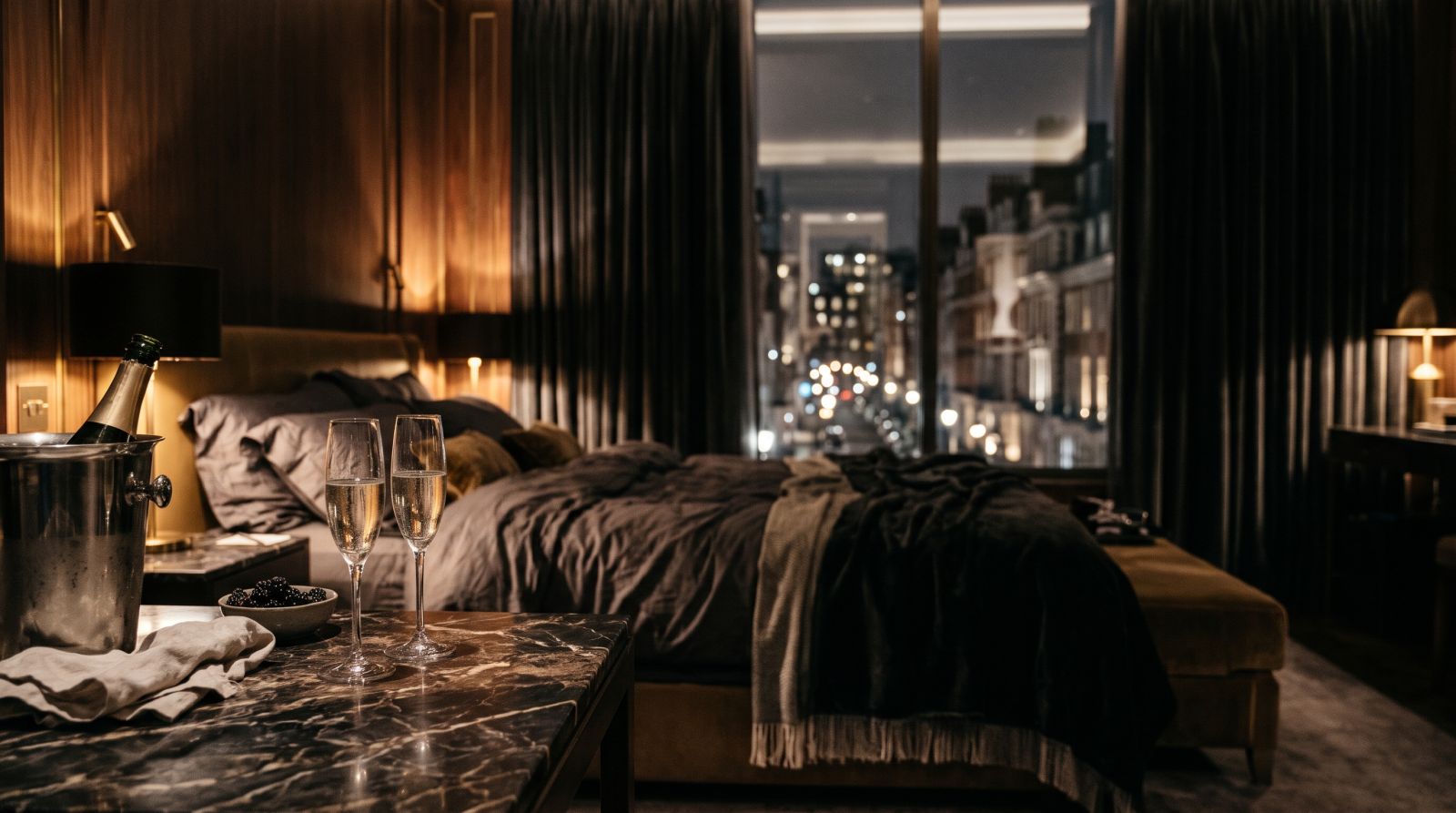
That architecture of refined secrecy never left W1. Mayfair was literally built to keep private evenings private: narrow mews lanes, secondary hotel doors and quiet private members’ clubs allowed a gentleman to arrive and leave without ever crossing a crowded lobby. Spending an evening with Mayfair escorts today carries that exact same cadence. You feel it the moment you step off Mount Street into a low-lit corner booth, or slip through a quiet side entrance at The Connaught or Claridge’s. Inside the suite, the city hum drops away behind thick curtains, a cold glass of champagne replaces the noise of the day, and the evening unfolds with polished, effortless ease.
Westminster & St James’s: The Corridors of Power and Discretion
Just south of Piccadilly sits St James’s, a compact enclave born in the eighteenth century around St James’s Palace and the legendary gentlemen’s clubs of St James’s Street: White’s, Brooks’s and Boodle’s. Starting life as chocolate houses and high-stakes card rooms, these institutions gave men of influence a sanctuary where they could dine, wager and talk freely away from the scrutiny of their country estates. As political power consolidated down the road in Whitehall across the nineteenth and twentieth centuries, the surrounding lanes of SW1 filled with discreet pied-à-terre flats maintained by ministers, senior civil servants and visiting envoys.
In Westminster, discretion has never been a pleasant bonus; it is the baseline requirement of survival. A man spending his day in committee rooms near Parliament Square or negotiating behind closed doors near Whitehall cannot afford awkward logistics, curious concierges or loud hotel lobbies. Experienced Westminster escorts read this tempo instinctively. Meetings here tend to happen inside modern, security-controlled residential blocks off Victoria Street or quiet classic hotels bordering St James’s Park. Keycard lifts, soundproofed windows and a calm, poised companion offer a clean mental break, letting the adrenaline of high-stakes policy or legal work drain away over a poured scotch and warm, undivided attention.
Knightsbridge & Kensington: Aristocratic Grandeur and Modern Ultra-Luxury
When London pushed westward after the Great Exhibition of 1851, Knightsbridge and Kensington shed their leafy suburban roots and rose into rows of palatial white-stucco terraces. Unlike the compact Georgian lanes of Soho or St James’s, the properties surrounding Eaton Square, Sloane Street and Kensington Palace Gardens were designed for sheer scale. Throughout the late Victorian and Edwardian years, high ceilings, roaring fireplaces and heavy velvet drapery framed private soirées hosted by ambassadors, foreign royalty and shipping magnates who wanted space, beauty and absolute control over who crossed their threshold.
By the late twentieth century, that same architectural grandeur drew international wealth from the Middle East, continental Europe and the Americas. For a client used to the upper tier of private hospitality, where extended dates and overnight stays routinely span from several hundred pounds to well over £1,000, the physical setting matters as much as the woman beside you. Inviting Knightsbridge escorts to a suite overlooking the dark treeline of Hyde Park, or unwinding over a slow weekend in a serviced townhouse with Kensington escorts, gives an encounter breathing room that cramped central business hotels cannot replicate. Room service is left quietly outside double doors, soft lamps warm the marble and linen, and nobody is watching the clock.
Marylebone & Baker Street: The 1960s Society Scandals and Quiet Mews Houses
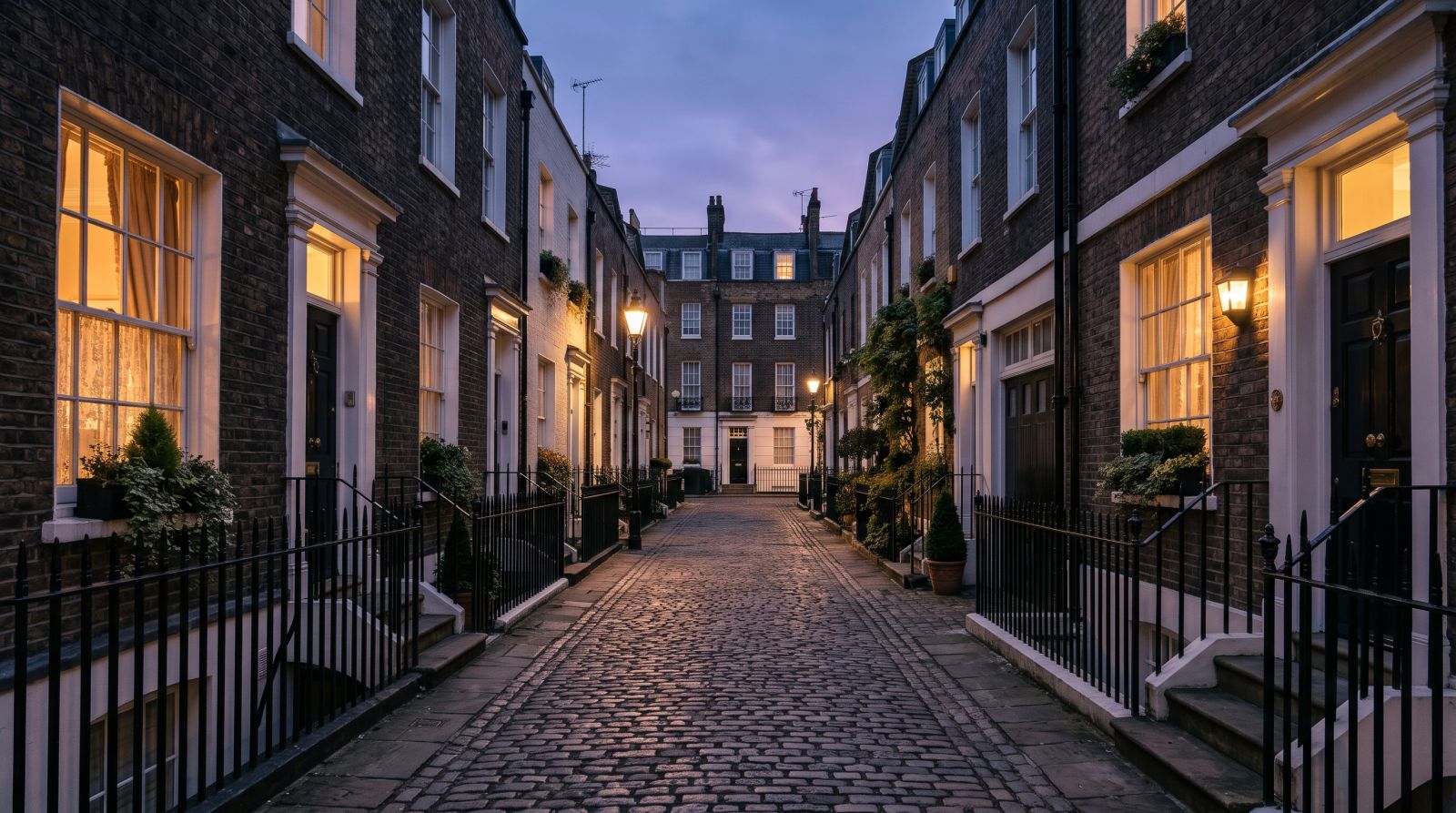
No honest map of pleasure and power in London skips Marylebone. Laid out on an orderly, dignified grid north of Oxford Street, the district was long associated with the brass plaques of Harley Street physicians and the red-brick mansion blocks around Baker Street. Yet in the early 1960s, its tucked-away cobbled mews became the stage for Britain’s most infamous high-society drama: the Profumo Affair. Behind the modest facade of 17 Wimpole Mews, society osteopath and portrait artist Stephen Ward hosted intimate, late-night gatherings where cabinet ministers, aristocrats and diplomats mingled over gin and jazz with captivating young women like Christine Keeler and Mandy Rice-Davies.
The elite of 1960s London did not gravitate to Marylebone by accident. They chose it because streets like Devonshire Street, Chiltern Street and Manchester Square look completely unremarkable from the pavement. There are no neon signs, no tourist queues and no paparazzi lingering on the corners. That exact residential calm is why the postcode remains a favourite for discreet appointments today. Many Marylebone escorts host from tasteful, well-kept apartments just minutes from Baker Street and Bond Street stations. Walking through a private front door into a warm living room with low music and a chilled drink waiting feels infinitely more personal than navigating the fishbowl of a grand hotel reception.
Soho & Covent Garden: Bohemian Theatres, Burlesque and Late-Night Energy
While Mayfair and St James’s perfected quiet aristocratic privacy, Covent Garden and Soho built their allure on theatrical spark. In the 1700s, the arcades of Covent Garden hummed with coffee houses, opera theatres and the famous "Harris’s List of Covent Garden Ladies," an annual pocket directory published between 1757 and 1795 that reviewed the wit, charm and conversational polish of the district’s most sought-after companions as closely as their looks. Actresses and courtesans were the celebrities of Georgian London, slipping out of stage doors to dine with writers, painters and young lords long after the final curtain dropped.
By the twentieth century, that bohemian pulse drifted a few streets west into Soho, where subterranean jazz cellars, late-night Italian trattorias and members-only drinking dens dissolved class boundaries once the clock struck midnight. Revitalised today with some of London’s sharpest boutique hotels and hidden cocktail bars, the neighbourhood still excels at an evening that begins in public. Arranging a late martini on Dean Street or a post-theatre supper in Covent Garden with Soho escorts lets the anticipation build naturally: a lingering glance across a candlelit table, a subtle brush of knees beneath the linen, and a five-minute walk through the warm glow of Soho back to your room.
Paddington, Bayswater & Canary Wharf: How Transit and Finance Redrew the Map
London’s map of companionship did not freeze in the last century. Two dramatic shifts in how men travel and work carved out entirely new hubs. The first started in 1854, when Isambard Kingdom Brunel opened Paddington Station, turning W2 and leafy Bayswater into the grand western gateway to the capital and filling its garden squares with classic Victorian railway hotels. In the modern era, the fifteen-minute Heathrow Express cemented that role. For a traveller landing at dawn or dusk with jet lag humming behind the eyes, checking into a quiet W2 hotel or arranging a visit with Paddington escorts in a nearby apartment means a hot shower, fresh clothes and immediate human warmth without fighting cross-town traffic.
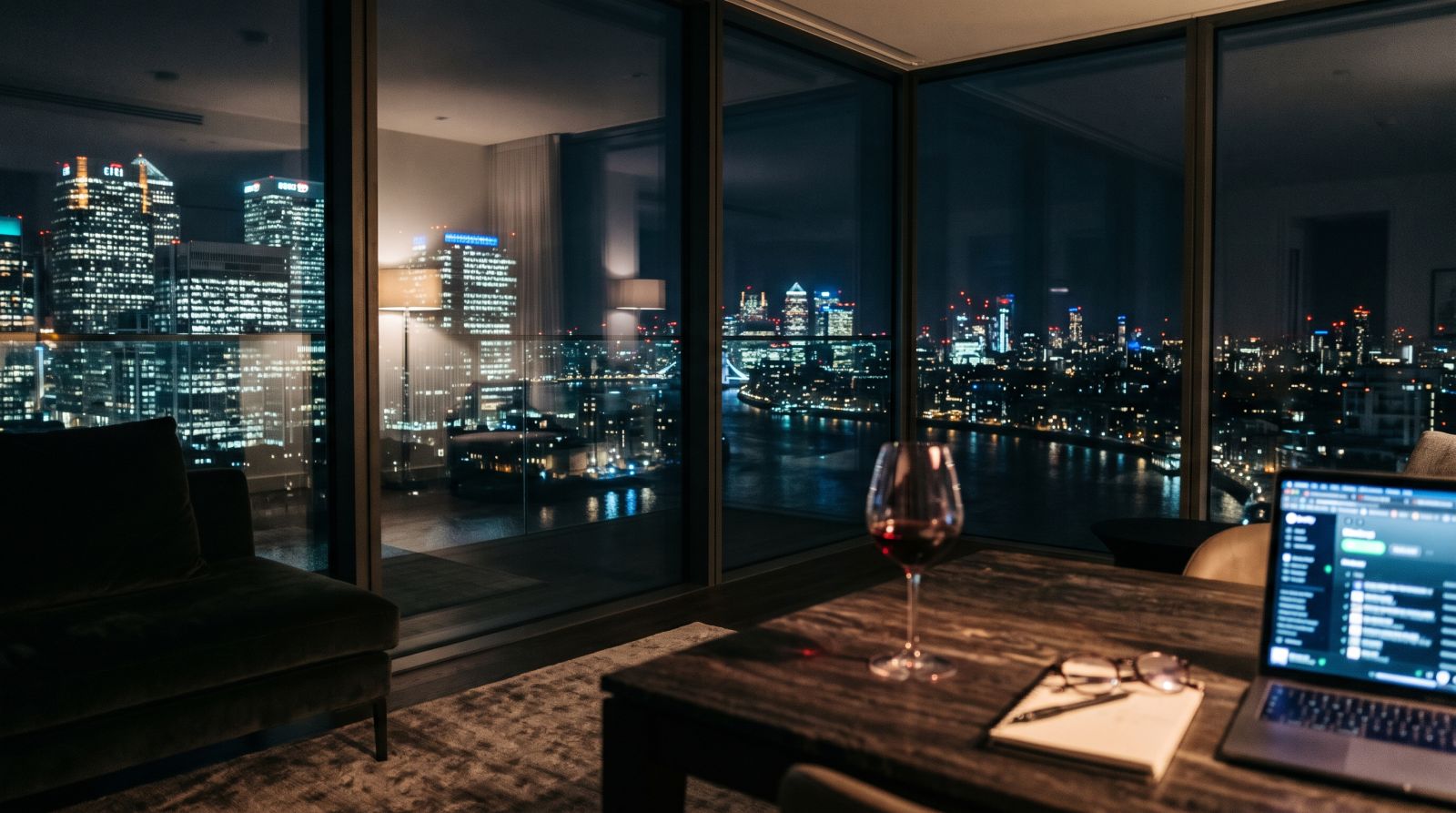
The second shift happened far to the east in the 1990s and 2000s, when the old West India Docks, where nineteenth-century merchant ships once unloaded rum and sugar, were reborn as the glass towers of Canary Wharf. Today, those fifty-storey landmarks house global investment banks, hedge funds and international law firms. After a fourteen-hour shift staring at screens in E14, sitting in a cab for forty-five minutes to reach the West End on a Tuesday night holds little appeal. The sleek residential skyscrapers around the docks have built their own self-contained world of comfort. Seeing Canary Wharf escorts means stepping straight from the trading floor or boardroom into a high-floor apartment above the Thames, dropping your briefcase by the door, pouring a glass of wine and letting the tension of the markets fade as the river lights shimmer far below.
Two centuries on, the carriages have given way to private chauffeurs and the gas lamps to dimmed hotel suites, yet the quiet rules of London hospitality remain unchanged. The right postcode sets the tone long before the first drink is poured. Whenever your next evening in the capital calls for refined, discreet company, exploring our curated selection of models across these historic neighbourhoods is the simplest way to step straight into that tradition.
Frequently Asked Questions
Which London district is best for a discreet hotel outcall?
It depends on the atmosphere you want. Mayfair and Knightsbridge offer iconic five-star hotels with impeccable room service, thick soundproofing and discreet side entrances. If you prefer lower-key surroundings without a busy lobby, the boutique hotels and serviced residences of Marylebone and Bayswater (W2) make coming and going completely effortless.
Why are so many high-class companions based in West and Central London?
Both history and practical convenience keep the centre of gravity in Zone 1. Postcodes like Mayfair, Marylebone, Kensington and Paddington combine London’s highest concentration of luxury hotels, quiet residential squares and fast links such as the Elizabeth line and Heathrow Express, keeping both incall and outcall appointments smooth and punctual.
How far in advance should I book a dinner date or overnight stay in London?
While hotel visits and incalls can often be arranged with an hour’s notice, booking a dinner date or an extended overnight stay at least 24 hours ahead is always wise. It gives your companion the time to plan the right dress code and schedule around your restaurant, theatre tickets or flight arrival.
Is Canary Wharf a good location for evening bookings if I am working in E14?
Yes. Canary Wharf has evolved into a major residential and executive hub with luxury serviced apartments and five-star hotels right beside the financial towers. Booking locally in E14 saves you a long late-night commute into Central London and lets you unwind immediately after work.
-
 Sabrina & Iza: Two Women, Two Experiences of Being a Trans Escort in LondonNov 11, 2026Sabrina and Iza, two trans escorts in London, answer eight questions about their work, their guests, and what they wish clients understood before a first meeting. Two very different women, in their own words.Read more...
-
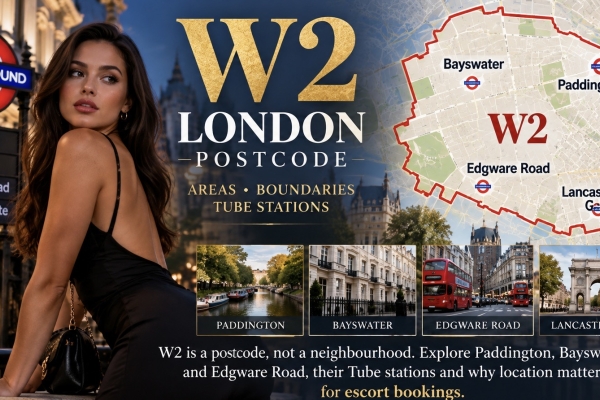 W2 London Explained: What the Postcode Covers, Street by StreetOct 21, 2026London has two Edgware Road stations, but only one is in W2. Discover what this postcode actually covers, from Paddington and Bayswater to Lancaster Gate, and which Underground stations serve each area.Read more...
-
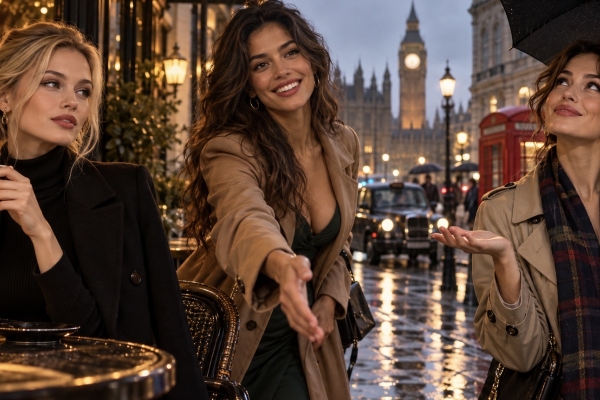 Russian, British and Brazilian Escorts in London: Culture, Character and First ImpressionsOct 15, 2026Russian, British and Brazilian escorts in London: their cultural traditions, humour, ways of communicating and the misunderstandings that can arise from first impressions.Read more...
-
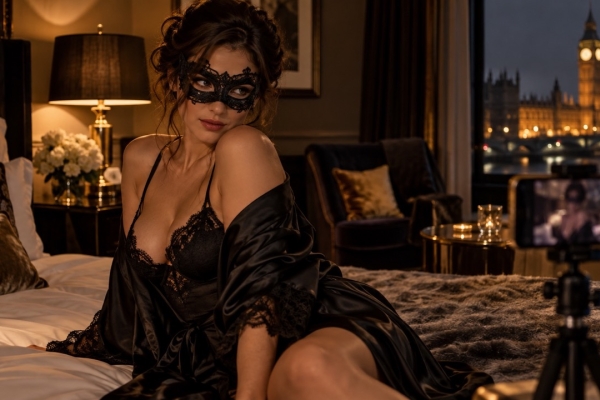 Filming With a Mask: The Look Is Half the StoryOct 07, 2026With her face covered, the eyes, outfit and mask do most of the visual work. Lace or satin, black or red, and what works best with each.Read more...


