

Belgravia on Foot — What This Neighbourhood Does to an Evening
Clients who arrive in London on Monday morning run at a pace the city doesn't reward. Hotel to meeting to dinner and back, efficient and somehow always slightly less than the week could have been. The ones who've been doing this long enough have identified something specific: the neighbourhood you move through before an evening shapes the evening itself.
Belgravia, walked without agenda, does something to the hours that follow that no restaurant choice achieves independently. This is the route our companions know. Some have walked it hundreds of times. A few have lived within its streets.
Where the noise drops
Sloane Square. West along King's Road for three minutes, long enough to feel Chelsea's commercial noise thin out behind you. Left onto Cheltenham Terrace, right onto St Leonard's Terrace. Pavements wide enough that two people walking slowly don't have to negotiate space. Georgian brick, residents invisible by design, the quiet that happens when a street has no functional reason to be busy before 9am.
Royal Hospital Chelsea gates open before nine on most mornings. Figure Court, the chapel, the long view south toward the Thames: ten minutes, nothing required of you. Chelsea Pensioners move through the grounds at the pace of people who stopped justifying their schedule to anyone a long time ago.
The residential core
Back into Belgravia via Tite Street. North through Redesdale Street, Ormonde Gate, the back of Carlyle Square. Nothing announces itself. Maintenance meticulous, architecture consistent, residents absent by choice. The money here stopped requiring external confirmation two generations ago.
A companion who knows these streets walks them differently than a visitor does: not narrating, not pointing, simply present in a neighbourhood she understands from inside. That quality is felt within minutes and can't be manufactured. Twenty minutes here before a difficult evening puts real quiet between you and whatever comes next. Not hotel quiet (no curated playlist, no managed temperature). A residential street at 8am asking nothing of you.
North at Sloane Avenue toward Pont Street.
Pont Street
Red-brick Dutch Revival, built through the 1880s. Critics at the time coined "Pont Street Dutch" as a dismissal. Current asking prices suggest the critics were operating with the wrong timeline.
Village scale despite sitting ten minutes from Harrods on foot. Mosimann's at No. 11b has operated as a private dining club since 1988, one of the most consistently discreet lunch venues in London for a table that requires no audience. A companion mentions it in conversation naturally, not as a recommendation (as somewhere she's been).
East to Cadogan Place.
Cadogan Place Gardens
Technically private: residents of surrounding streets hold the keys. South gates often unlocked on weekday mornings before ten. Worth attempting without announcement.
If locked, the perimeter walk. The square runs larger than it reads from the street, quieter than anything this close to Sloane Street has any right to be. A bench near the north gate on a Tuesday morning. Nothing happening. Nobody performing the act of relaxing. That specific quality, unremarkable calm inside one of the most pressured cities in the world, is what Belgravia gives when you move through it at the right pace.
A companion who doesn't treat silence as a gap to fill makes this the obvious place to stop.
The mews
Originally stabling: grooms' quarters above, horses below. Converted to residential across the twentieth century. Price per square foot in a well-positioned Belgravia mews now typically runs above the principal streets (not despite former function, because of what that function produced: human scale, no through-traffic, the specific quiet of streets whose architecture never anticipated cars).
Eaton Mews North. South through Chester Mews. West through Motcomb Street: wine merchant, the Pantechnicon building, a neighbourhood that stopped needing to demonstrate anything to passing visitors a long time ago.
Eccleston Square
Five storeys, cream stucco, black iron railings. Terrace runs the full length of the square without interruption, architecturally uncommon in London, where most terraces break at some point for a later insertion. Mozart stayed on nearby Ebury Street in 1764 while Leopold arranged concerts. The square was laid out in the 1820s. Basic geometry unchanged since.
The walk takes ninety minutes to three hours depending entirely on whether you allow yourself to stop. Coffee at the Pantechnicon in the middle, phone in a coat pocket. Most people in London don't give themselves permission to take the longer version.
Clients who do, who arrive Sunday evening, who walk this before dinner rather than after, describe their London weeks differently. Not more relaxed. More present. The distinction shows later in the room, and experienced clients recognise it without being told what produced it.
-
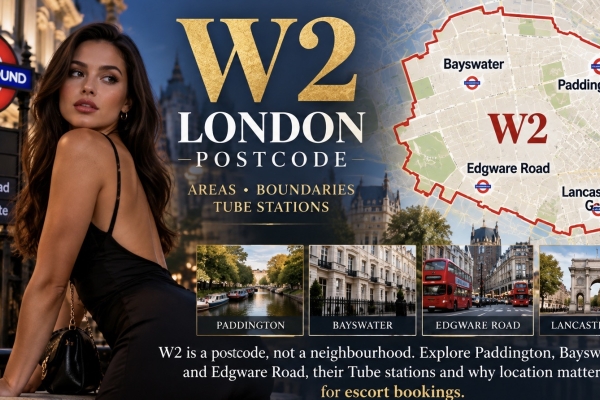 W2 London Explained: What the Postcode Covers, Street by StreetOct 21, 2026London has two Edgware Road stations, but only one is in W2. Discover what this postcode actually covers, from Paddington and Bayswater to Lancaster Gate, and which Underground stations serve each area.Read more...
 -
 Russian, British and Brazilian Escorts in London: Culture, Character and First ImpressionsOct 15, 2026Russian, British and Brazilian escorts in London: their cultural traditions, humour, ways of communicating and the misunderstandings that can arise from first impressions.Read more...
 -
 Filming With a Mask: The Look Is Half the StoryOct 07, 2026With her face covered, the eyes, outfit and mask do most of the visual work. Lace or satin, black or red, and what works best with each.Read more...
 -
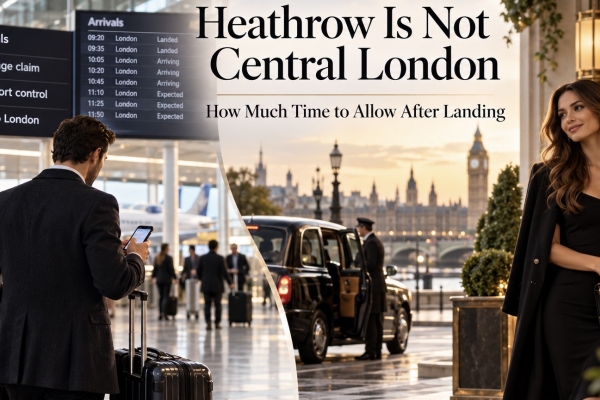 Heathrow Is Not Central London: How Much Time to Allow After LandingOct 01, 2026Landing at Heathrow with a booking in London the same day? Passport control, baggage and the trip into town all take time. This article explains how long to allow and which train suits which part of the city.Read more...


